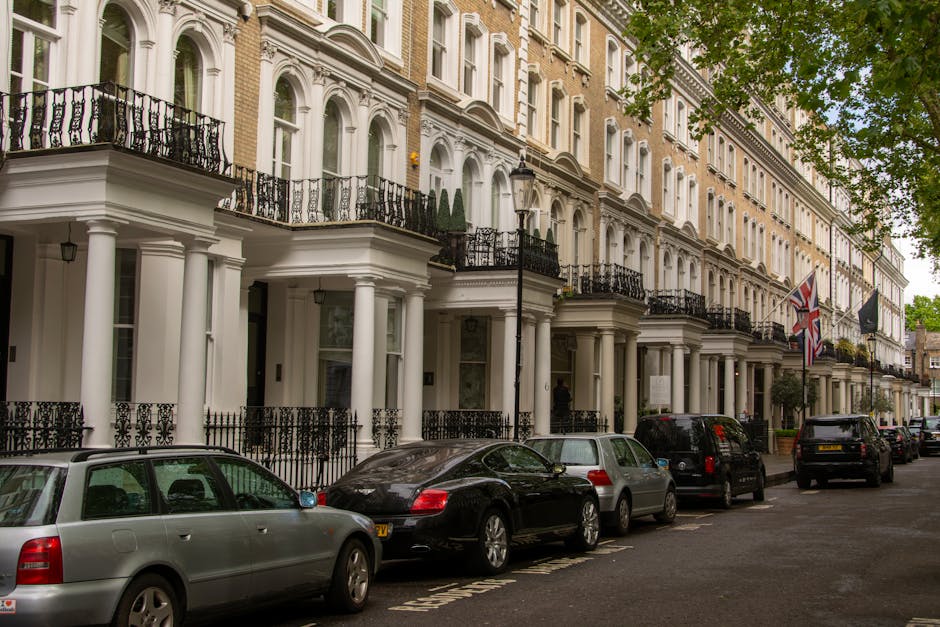
Pimlico SW1V Moves: Best Streets for Easy Removals
If you are planning a move in Pimlico, the street you live on can matter just as much as the size of your flat. Narrow roads, controlled parking, terrace steps, busy through-routes, and the odd awkward corner can turn a simple move into a long morning. That is why Pimlico SW1V moves: best streets for easy removals is not just a nice local topic - it is the sort of practical knowledge that can save time, reduce stress, and make your move feel far more manageable.
In this guide, we look at the streets and street types that tend to make removals easier in SW1V, why access matters so much here, and how to plan around the little frustrations that often catch people out. We will also cover the best vehicle options, when a man and van service makes sense, and what to check before moving day. Truth be told, in Pimlico, the small details do the heavy lifting.
Whether you are moving from a basement flat near a tight terrace, a mansion block with lift access, or a quieter residential street with better kerbside space, the aim is the same: make the move smoother, quicker, and less chaotic. Let's get into the streets, the realities, and the decisions that actually matter.
Table of Contents
- Why Pimlico SW1V Moves: Best Streets for Easy Removals Matters
- How Pimlico SW1V Moves: Best Streets for Easy Removals Works
- Key Benefits and Practical Advantages
- Who This Is For and When It Makes Sense
- Step-by-Step Guidance
- Expert Tips for Better Results
- Common Mistakes to Avoid
- Tools, Resources and Recommendations
- Law, Compliance, Standards, or Best Practice
- Options, Methods, or Comparison Table
- Case Study or Real-World Example
- Practical Checklist
- Conclusion
- Frequently Asked Questions
Why Pimlico SW1V Moves: Best Streets for Easy Removals Matters
Pimlico has a very specific feel to it: elegant terraces, compact streets, mansion blocks, and a steady mix of residents, professionals, and long-term locals. That charm is part of the appeal. It is also what makes moving here a bit more technical than in areas with wider roads and simpler parking.
When removals go wrong in Pimlico, it is usually not because the team is unskilled. More often, it is because access was underestimated. A van that cannot stop close enough to the entrance. A street that is busier than expected by mid-morning. A stairwell that is tighter than the photos suggested. You know the kind of thing - the box that looked light until it had to be carried four floors up, in one go, after a sweaty wait on the pavement.
Understanding which streets are easier for removals helps in three important ways:
- It helps you choose the best arrival time for the vehicle.
- It improves how you plan parking, loading, and unloading.
- It reduces the chance of delays, damage, or unnecessary lifting.
For anyone comparing removal services, access should sit near the top of the checklist. The more clearly you understand your street, the more accurately a mover can quote, schedule, and prepare. That is especially true in SW1V, where two streets a few minutes apart can feel very different on moving day.
Expert summary: the "best" streets for removals are usually the ones with reasonable kerbside access, wider carriageways, simpler parking, and fewer bottlenecks near the building entrance. In Pimlico, that can be the difference between a tidy move and a day that drags on far too long.
How Pimlico SW1V Moves: Best Streets for Easy Removals Works
There is no formal ranking system for the easiest streets in Pimlico, and anyone promising a perfect one is probably overselling it a bit. Instead, the practical approach is to judge each street against the factors that matter to removal teams and residents alike.
These are the main things to look at:
1. Kerbside access
If a van can park close to your front door or building entrance, everything gets easier. Short carry distances reduce time, reduce the number of trips, and lower the chance of knocks and scrapes. In narrow streets, a few extra metres can make a surprising difference. It sounds small. It is not.
2. Parking pressure
In central London, parking can shape the whole move. Streets with more predictable bays, less commuter demand, or clearer loading space tend to work better for removals. If the vehicle has to circle several times or wait while spaces open up, the day can become messy fast.
3. Building access
Some Pimlico properties are naturally easier to work with: ground-floor entrances, lift access, decent communal hallways, and no awkward basement turn. Others are beautiful but less forgiving. A grand staircase may look lovely in the listing photos. Your back may disagree later.
4. Traffic flow and timing
Even a manageable street can become difficult if it gets congested at the wrong time. School runs, lunchtime traffic, deliveries, and commuters all change the picture. Early morning often works better, though local conditions and building rules still matter.
5. Street layout and turning space
Longer vehicles need room to approach, stop, and depart safely. Streets with cleaner sightlines and fewer tight turns are usually better for larger removals. If you are using a removal van or a bigger truck, this becomes even more relevant.
A sensible moving plan in Pimlico usually starts with a simple question: where can the vehicle stop, for how long, and how far will items need to be carried? Once you answer that, the rest starts to make much more sense.
Key Benefits and Practical Advantages
Choosing a more removal-friendly street or building in Pimlico is not just about convenience. It can shape the whole moving experience in ways people notice immediately.
- Less time wasted: shorter carry distances and easier parking usually speed things up.
- Lower risk of damage: fewer turns, fewer stairs, and less congestion mean fewer opportunities for mishaps.
- Better value for money: when a move is straightforward, the team spends less time wrestling with access issues.
- Reduced stress: moves are tiring enough without last-minute vehicle juggling on a narrow street.
- Better timing control: easier streets give you more flexibility if the schedule shifts a little.
There is also a quieter benefit that people often miss: a smooth loading setup gives you more headspace. You can focus on the paperwork, the meter readings, the keys, and the inevitable hunt for the one box labelled "miscellaneous" that contains half your kitchen.
For landlords, tenants, and flat owners alike, that calmer rhythm matters. It helps everyone involved stay organised, and it makes the handover at the old or new property feel less fraught. If you are moving a full household, you may also want to explore home moves support, especially where access is uncertain or furniture is bulky.
Who This Is For and When It Makes Sense
This guide is useful for anyone moving within, into, or out of Pimlico SW1V, but it is especially helpful if your move involves one or more of the following:
- a flat on a busy or narrow street
- a basement property with stairs up to street level
- a top-floor flat without easy lift access
- large furniture or awkward items
- limited parking or loading space
- a move that needs to be done quickly and cleanly
It is also useful if you are deciding between a fully managed removal team and a smaller vehicle-based service. For example, a single-person move from a compact flat may be perfectly suited to man with a van support, while a larger family move or a property with multiple rooms may need a more structured removal plan.
This kind of planning matters most when time is tight. Maybe your tenancy ends at midday. Maybe the new place is not ready until late afternoon. Maybe your building has a loading window that cannot be missed. In those situations, the "best street" is not the prettiest one - it is the one that gives your move breathing room.
Step-by-Step Guidance
If you want to make a Pimlico move easier, use a methodical approach. A bit of prep goes a long way here.
- Check the street conditions first. Look at parking, loading restrictions, and any obvious access issues around the building.
- Measure the difficult bits. Doorways, stair turns, lifts, and bulky furniture should all be considered before moving day.
- Decide what vehicle fits. A smaller van can be easier on cramped streets, while a larger move may justify a bigger truck or two trips.
- Confirm timings. Avoiding the busiest local periods can reduce delays. Early starts often help, but building rules may matter more.
- Pack with carry distance in mind. Heavy boxes should stay manageable. Put essentials in a clearly labelled box for easy access.
- Protect the route. Hallways, floors, and door frames are worth safeguarding, especially in older properties.
- Have a plan B. If the first parking spot is taken, know where the nearest fallback might be.
That last point sounds obvious, but in practice it is often the one that saves the day. Parking in Pimlico can be a moving target. A good crew plans for that instead of pretending it will all work itself out.
If you need temporary holding space between properties, storage can also smooth the process. It is particularly helpful if completion dates shift, the new flat is being decorated, or not everything is ready at once. A little flexibility never hurt anyone.
Expert Tips for Better Results
After enough local moves, certain patterns become pretty clear. These are the tips that tend to pay off.
Choose the right street, but do not obsess over perfection
Some streets will always be easier than others, but most Pimlico moves can be handled well with the right planning. Do not get stuck chasing the "ideal" route if the real improvement is simply in timing, parking preparation, and vehicle choice.
Use short carry routes wherever possible
In our experience, reducing the carry distance is one of the best ways to cut friction from a move. If the van can stop nearer the entrance, everything becomes calmer. People move more carefully. Boxes are less likely to get dropped. The whole thing feels less hurried.
Think about the building, not only the street
A wide road does not help much if the front hall is cramped or the lift is unreliable. Likewise, a smaller street can still work well if the internal access is simple. Street and building need to be considered together.
Prepare for the one awkward item
Every move has one object that deserves a sigh. Maybe it is the sofa that barely fits through the hallway. Maybe it is a wardrobe panel. Maybe it is a piano. If you are moving a heavy or delicate instrument, a specialist service such as piano removals is worth considering rather than improvising.
Keep the start time realistic
Early starts can help, but only if everyone is actually ready. If you know packing will run late, factor that in. A rushed schedule in a tight London street is where small problems become big ones. And big ones tend to arrive all at once, which is never fun.
Common Mistakes to Avoid
People often make the same few mistakes when planning a move in SW1V. Avoiding them can save a lot of grief.
- Assuming every Pimlico street is the same. They are not. Access can change dramatically from one block to the next.
- Ignoring parking restrictions. This is a classic one. If the van cannot stop, the move slows down immediately.
- Underestimating stairs. A property that seems "only one floor up" may still involve awkward turns, shared landings, or narrow bends.
- Booking the wrong size vehicle. Too small means extra trips. Too large may make street access harder than it needs to be.
- Packing oversized boxes. Heavy boxes are slower, riskier, and far more annoying to carry. To be fair, nobody enjoys a box of books packed like bricks.
- Not telling the removal team about access issues. Lifts, entry codes, roadworks, and restricted loading times should all be shared early.
One of the easiest ways to avoid trouble is simply to describe your property accurately. A good moving team can usually work with difficult access. What they cannot work with is surprise.
Tools, Resources and Recommendations
You do not need a van full of specialist gear to move in Pimlico, but a few practical tools can make a big difference.
Useful moving basics
- sturdy boxes in mixed sizes
- packing tape and labels
- blankets or wraps for furniture
- trolley or sack truck for heavier items
- door and floor protection where needed
- torch for dim hallways or basement access
Helpful service choices
If you have a standard flat move, flat removals can be a sensible fit because the service is shaped around the realities of apartment access, lifts, stairwells, and tight entrances. For larger or more complex jobs, a broader removals service may be the better all-round option.
Commercial tenants and small offices moving in or near Pimlico should look at office removals or commercial moves, because business moves have different timing pressures and equipment needs. A 9 a.m. deadline can feel very different when the team also needs to keep desks, files, and electronics intact.
For packing support, packing and boxes or packing and unpacking services can reduce the last-minute scramble. If you are the sort of person who starts packing with "I'll do it properly later", this may be your gentle sign to get help.
Law, Compliance, Standards, or Best Practice
Local moves in London are not usually about heavy regulation, but there are still practical rules and standards to respect. Parking restrictions, loading limits, access times, and building management requirements can all affect removals in Pimlico. It is always sensible to check your building's move-out or move-in rules in advance, especially if you live in a managed block or a property with shared access.
Good moving practice also means protecting people and property. Removal teams should handle items safely, avoid blocking entrances unnecessarily, and use appropriate lifting techniques. Where items are heavy, awkward, or fragile, it is better to plan properly than to take a shortcut that ends in damage. That much is just common sense, but common sense is often the first thing to disappear on a stressful moving day.
If you are comparing providers, it is also worth checking how they approach safety, liability, and payment clarity. Pages such as insurance and safety, health and safety policy, and payment and security can help set expectations before anything is booked. Clear terms are not glamorous, but they are reassuring.
For environmentally conscious customers, recycling and disposal choices matter too. If you are clearing unwanted furniture or wrapping materials, take a look at recycling and sustainability and ask how waste is handled. In a compact area like Pimlico, sensible disposal is part of being a decent neighbour.
Options, Methods, or Comparison Table
Different Pimlico moves suit different approaches. Here is a simple comparison to help you decide what fits your situation best.
| Move type | Best for | Access needs | Typical advantage | Main drawback |
|---|---|---|---|---|
| Man and van | Small flats, light loads, flexible timings | Lower to moderate | Agile on tighter streets | May need multiple trips for larger moves |
| Full removal service | Family homes, larger flats, bulky furniture | Moderate to high | More support with handling and planning | Can take more coordination |
| Storage plus move | Staggered completions, renovation gaps, decluttering | Moderate | Flexible if dates do not line up | Extra planning and cost to consider |
| Same-day removals | Short-notice moves, urgent handovers | Usually straightforward access preferred | Fast response in a pinch | Less room for delays or complexity |
In a place like Pimlico, the easiest option is often not the biggest one. It is the one that matches your property, street access, and timing. If you are dealing with a small load and a street with limited stopping room, a lighter vehicle can be a very smart choice. If you are moving a whole household, a fuller service may save you from a lot of back-and-forth.
There is no prize for choosing the most complicated route. Pick what actually fits.
Case Study or Real-World Example
Here is a realistic example from the kind of move many people in SW1V face.
A couple moving from a third-floor flat on a busy Pimlico street had a fairly ordinary load on paper: beds, boxes, a sofa, dining furniture, and a handful of fragile items. At first glance, it sounded like a standard morning job. But the building entrance sat just far enough from the nearest parking spot to make long carries unavoidable, and the road itself had regular passing traffic.
Rather than forcing a larger vehicle into a tighter setup, the move was planned around a smaller van, an early arrival window, and a short, organised loading sequence. Boxes were stacked by room, the sofa was wrapped in advance, and the team knew which items needed to come out first. The result was not dramatic or flashy. Which, honestly, is what you want.
There was still the usual London wrinkle: one resident needed to come and go during loading, and a delivery van paused awkwardly opposite the entrance for a minute. But because the access plan had been thought through, it never turned into a real problem. The move stayed controlled, nobody was rushing, and the final handover happened without that last-minute panic that so many moves seem to produce.
The lesson is simple. In Pimlico, a good move is rarely about luck. It is about reading the street well and planning around it with a bit of care.
Practical Checklist
Use this checklist before moving day to keep your Pimlico removal as straightforward as possible.
- Confirm your exact address and entrance details.
- Check parking and loading restrictions for both properties.
- Measure stairwells, lifts, and doorway widths if needed.
- List any large, heavy, or fragile items separately.
- Decide whether a man and van, full removal service, or storage is the best fit.
- Pack essential items in one clearly labelled bag or box.
- Protect floors, walls, and door frames where necessary.
- Share access codes, flat numbers, and contact details with the moving team.
- Keep water, keys, and important documents close at hand.
- Build in some margin for traffic, parking, or building delays.
Quick takeaway: if you only remember one thing, make it this - the easier the street access, the simpler the whole move becomes. And if the street is not easy, a solid plan can still make it workable.
Conclusion
Pimlico SW1V moves are easiest when you choose the right street approach, prepare for access properly, and match the moving method to the property rather than the other way around. In practice, that means thinking about kerbside access, parking pressure, stair access, and vehicle size long before the first box is lifted.
The best streets for easy removals are usually the ones that let the team work cleanly and safely, with less waiting and less carrying. But even on a trickier road, a careful plan can make a huge difference. That is the real value here: not finding a perfect street, but understanding what makes one move smoother than another.
If you are still deciding how to handle your Pimlico move, the smartest next step is usually to compare your property access honestly, then choose the service that fits it best. A little preparation now can save a lot of noise, effort, and stress later. And that, to be fair, is worth quite a lot on moving day.
Get a free quote today and see how much you can save.
Frequently Asked Questions
Which Pimlico streets are usually easiest for removals?
The easiest streets are generally the ones with better kerbside access, clearer parking, and less congestion near the building entrance. In Pimlico, that often means quieter residential stretches or streets with more predictable stopping space rather than busy through-roads.
Is a man and van suitable for moves in SW1V?
Yes, often it is. A man and van service can be a very practical choice for smaller flats, lighter loads, or streets where a larger vehicle would struggle. It is especially useful when access is tight and you want a faster, more flexible setup.
How do I know if my street is too narrow for a removal van?
Check whether vehicles can legally stop nearby, whether there is enough room to load safely, and whether the van would block traffic or access. If you are unsure, describe the street honestly to the removal company so they can advise on the best vehicle size.
Do I need parking permission for a move in Pimlico?
You may need to arrange parking or loading permission depending on the street and local restrictions. It is wise to check this before moving day rather than assuming it will be fine. A small oversight here can cause a surprisingly big delay.
What time of day is best for removals in Pimlico?
Early morning often works well because streets can be less busy and access may be easier. That said, the best time also depends on building rules, parking conditions, and traffic patterns on your specific street.
Are flat removals easier than house removals in SW1V?
Not always, but they are often more about access than size. A flat move in Pimlico can be straightforward if there is good lift access and sensible parking. A house move with easy frontage can sometimes be simpler than a flat with awkward stairs.
What should I tell the removal team before booking?
Tell them about stairs, lifts, entry codes, parking limits, street width, bulky furniture, and any time restrictions. The more accurate the information, the more accurate the plan. This is one of those cases where details matter a lot.
Can storage help if my move date is uncertain?
Yes. Storage is useful if your completion date changes, your new place is not ready, or you need to move in stages. It gives you flexibility and removes some pressure from the main moving day.
What if I have a very heavy or awkward item?
Specialist handling is usually the safer route. Items like pianos, large wardrobes, or delicate furniture often need more than a standard lift-and-carry approach. Planning for the awkward item early is much better than trying to solve it on the pavement.
How far in advance should I plan a Pimlico move?
The earlier the better, especially if your building has access restrictions or your move needs to happen at a specific time. Even a simple local move benefits from a bit of lead time, because parking and scheduling in SW1V can be tighter than people expect.
What if my street is busy on the day of the move?
Build in extra time, share that risk with your removal team, and have a fallback plan for parking or loading. Busy streets are normal in central London. The trick is not to hope they will be quiet, but to prepare as if they might not be.
Where can I learn more about pricing and booking?
It helps to review the company's pricing and booking guidance early so you know what is included and what information will affect the quote. Clear expectations make the whole process calmer and more transparent.
For anyone planning a move in SW1V, a careful look at access, timing, and street layout is usually the difference between a stressful scramble and a tidy, well-run day. Keep it simple, stay organised, and give yourself a little breathing room. That is often enough to make all the difference.